
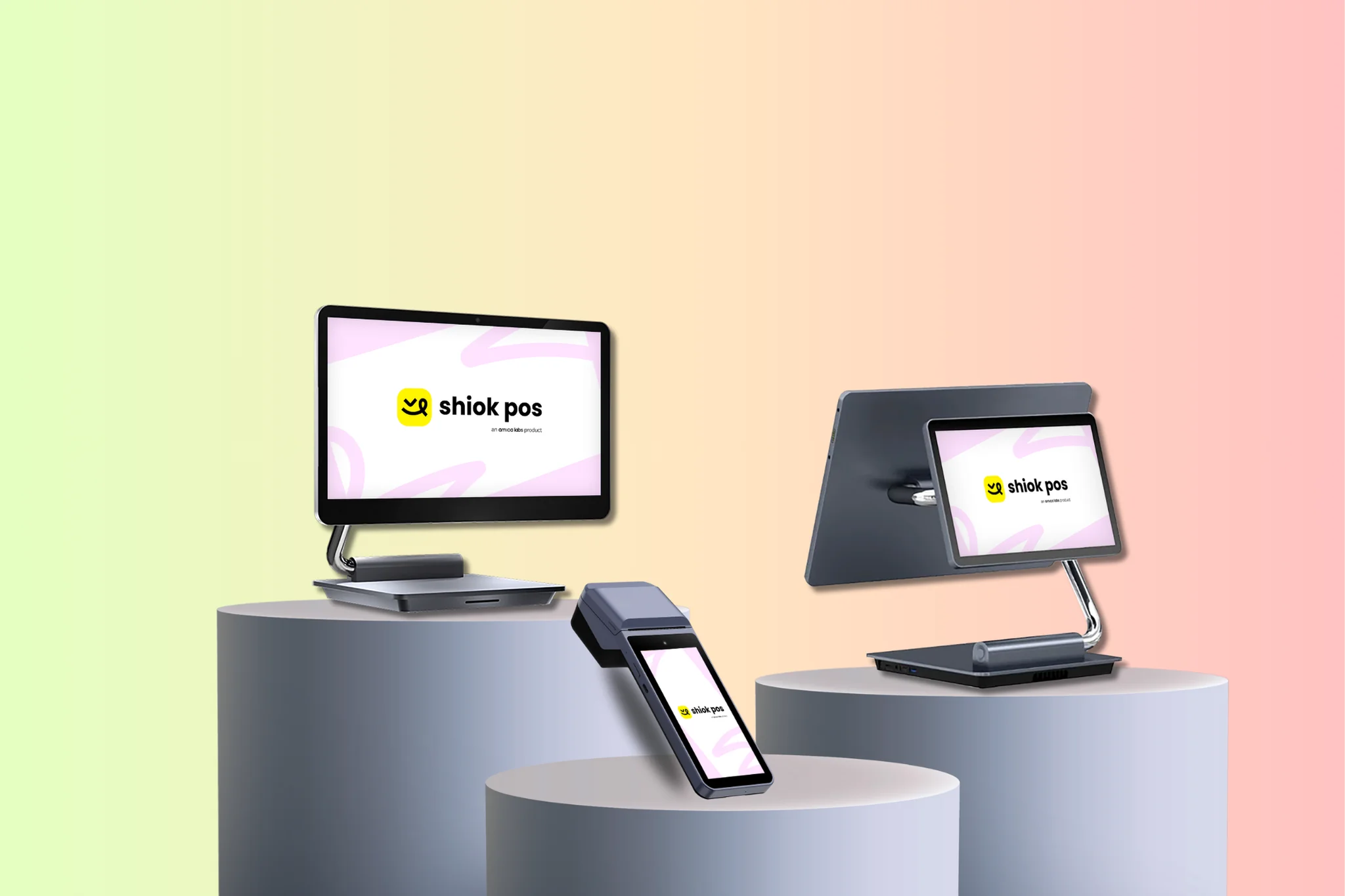
POS pricing in Malaysia varies depending on the provider and what your business needs. As a guide, expect to pay around RM79 to RM119 per month for cloud POS software and a one-time RM1,899 to RM2,399 for a POS terminal (or from RM749 for a standalone payment device), or you can get a complete, ready-to-use bundle from around RM2,068. The figures in this guide are based on Shiok POS pricing, so you have real numbers to plan around rather than vague estimates.
If you run a retail shop or an F&B outlet and you’re trying to budget for a point-of-sale system, this guide breaks down every cost, including the ones most providers don’t mention upfront, so you know exactly what to expect.
The two main costs: software and hardware
Every POS system has two cost components: the software that runs your sales, inventory, and reports, and the hardware you ring up sales on. Modern systems split these so you can mix and match based on your budget.
1. POS software (monthly subscription)
Most POS systems in Malaysia today are cloud-based and charged as a monthly subscription. This keeps your upfront cost low and means software updates, security, and support are included. (If you’re weighing cloud against an older on-premise setup, see our guide on cloud POS vs traditional POS.)
| Plan | Best for | Price |
|---|---|---|
| Starter | New or single-outlet businesses | RM79/mo |
| Growth | Growing businesses needing staff & stock tools | RM119/mo |
The bigger plans add features like customer management, employee attendance, detailed stock management, payroll, and priority support. You can compare what’s included in each tier on the Shiok POS software page.
Tip: Paying upfront usually lowers the price. Shiok POS offers 6-month plans (save ~10%) and 12-month plans (save ~20%). For example, Starter drops to roughly RM63/month when billed annually.
2. POS hardware (one-time purchase)
Hardware is what your staff actually use at the counter: the terminal, screen, and any add-ons. It’s a one-time cost, and prices vary based on screen size, build quality, and processing power.
| Device | Best for | Price |
|---|---|---|
| Pro | Most retail & F&B counters | RM1,899 |
| Ultimate | High-volume outlets, dual-screen setups | RM2,399 |
| Thermal Printer | Printing kitchen & receipt dockets | RM399 |
| Cash Drawer | Securely storing cash | RM249 |
If you only need to accept payments rather than run a full point-of-sale setup, a standalone payment device like the Essential (RM749) is a lower-cost option. It handles card, QR, and e-wallet payments without the full POS terminal. Not sure which device fits your counter? Browse the full range on the hardware page.
The easiest option: POS bundles
For most businesses, the simplest and most cost-effective route is a bundle: hardware and software packaged together, pre-configured, and ready to use on day one. Bundles remove the guesswork of matching parts and usually work out cheaper than buying everything separately.
Shiok POS bundles start from RM2,068.20 and scale up depending on whether you want a single or dual screen, a cash drawer, and which software tier you choose. You can see all the bundle options on the bundles page.
Don’t forget the hidden costs
The sticker price isn’t the whole story. Here are the extra costs that catch many business owners by surprise, and how to plan for them.
Payment processing fees
This cost only applies if you process payments through the POS itself. If you do, you’ll pay a small transaction fee on each card, DuitNow QR, or e-wallet sale, charged by the payment provider rather than the POS. Some POS systems also let you keep using your own preferred bank terminal instead, so it’s worth checking how each provider handles payments before you commit.
Consumables (receipt paper)
Thermal receipt paper runs out and needs restocking. It’s cheap, from around RM1.35 per roll, but it’s recurring. You can stock up on the POS supplies page.
Add-ons
A cash drawer (RM249) or thermal printer (RM399) may be optional at first but become essential as you grow. Budget for them if your workflow needs them.
Training and setup
Getting your team confident on the system pays off fast. Some providers charge for onboarding; Shiok POS offers on-site training and onboarding (available within the Klang Valley) so your staff are up to speed from day one.
Device protection
POS hardware is used hard, every day. Accidental damage means downtime, and lost sales. Optional device insurance (from RM10/mo) keeps you covered. Learn more on the insurance plan page.
How to budget for your business
Here’s a realistic first-year estimate for a typical single-outlet F&B or retail business:
- Hardware: one-time RM1,899–RM2,399 for a POS terminal, or from RM749 for a payment device (or a bundle from RM2,068)
- Software: RM79–RM119/month (RM948–RM1,428/year)
- Consumables & add-ons: a few hundred ringgit, depending on volume
- Optional protection: from RM10/month
Smart move: a lower upfront price isn’t always cheaper long-term. Look at full lifecycle cost, including setup, support, and what happens when you upgrade. Shiok POS even offers a buyback programme that gives you credit toward your next device when you upgrade.
Why local pricing and support matter
Many global POS brands quote in US dollars, bill in foreign currency, and offer support in a different time zone. For a Malaysian business, that means currency surprises and slow help when something breaks during a busy lunch rush.
Shiok POS is built for Malaysia: transparent ringgit pricing, local setup, e-invoicing support, and a local team you can reach by phone or WhatsApp. That’s the difference between a cost you can plan around and one that keeps surprising you.
FAQs
How much does a POS system cost in Malaysia?
POS software typically costs RM79 to RM119 per month, while a POS terminal ranges from around RM1,899 to RM2,399. If you only need to accept payments, a standalone payment device starts from about RM749. Complete bundles that combine hardware and software start from about RM2,068.
Is it cheaper to buy a bundle or separate hardware and software?
A bundle is usually cheaper and simpler, because the hardware and software are packaged at a discounted rate and pre-configured to work on day one.
Are there hidden costs with a POS system?
Common extras include payment processing fees, receipt paper, optional add-ons like cash drawers and printers, training, and device insurance. A provider with transparent local pricing helps you avoid surprises.
Do I have to pay for POS software every month?
Most cloud POS systems use a monthly subscription, which keeps upfront costs low and includes updates and support. Shiok POS also offers 6-month and 12-month upfront plans that lower the effective monthly price.
Get a clear quote for your business
Tell us your business type and size, and we’ll recommend the right setup, with transparent ringgit pricing and local support.
Get a Demo