
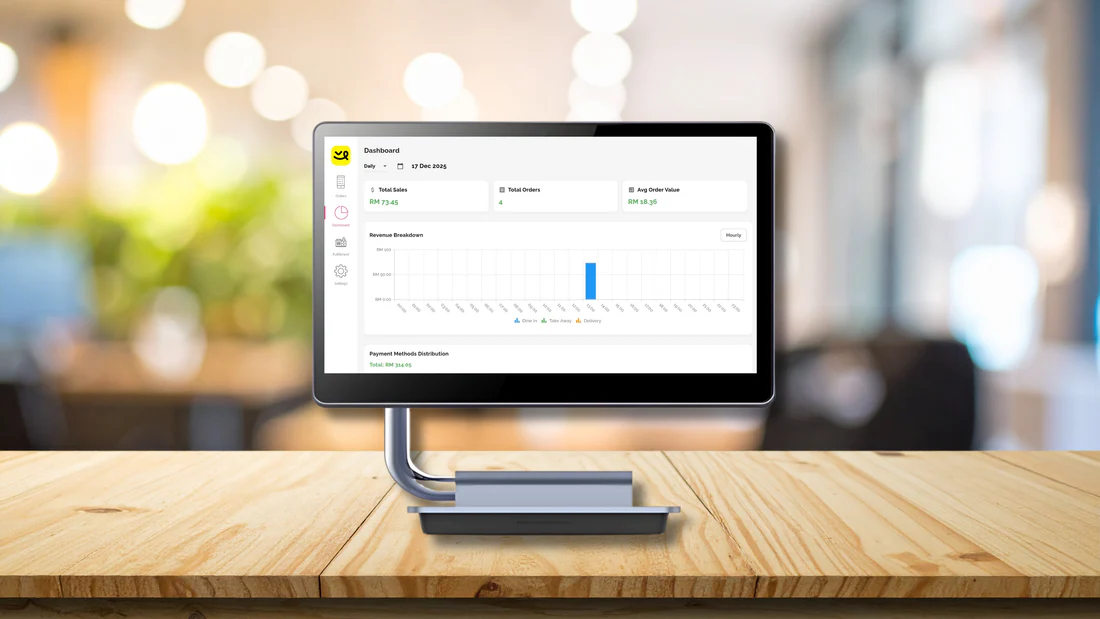
The main difference between cloud POS and traditional POS systems is where your data is stored and how the system is accessed. A cloud POS system stores data online and can be accessed from anywhere, while a traditional POS system stores data locally on physical machines. This difference affects everything from flexibility to maintenance and scalability.
☁ Cloud POS
- Data stored online
- Access from anywhere
- Real-time updates
- Easy to scale
- Automatic updates
🖥 Traditional POS
- Data stored locally
- On-site access only
- Manual updates required
- Complex to expand
- Requires IT support
What is a cloud POS system?
A cloud POS system runs on the internet. All your data — sales, inventory, and reports — are stored securely online. This means you can access your system from your store, your home, or any device with internet access.
1. Access from anywhere
You can check sales, monitor inventory, or view reports anytime — even when you're not at the store. This is especially useful for multi-outlet businesses and owners who aren't always on-site.
2. Real-time updates
All data updates instantly. A sale is made and inventory updates immediately. Reports reflect real-time performance. This gives you a clear and accurate view of your business at all times.
3. Easier maintenance
Cloud systems are managed online, which means no manual software updates, fewer technical issues, and less reliance on IT support.
4. Scalability
Cloud POS systems are easier to expand. You can add new outlets, new devices, and upgrade features without major setup changes.
What is a traditional POS system?
A traditional POS system runs on local servers or computers within your store. Data is stored directly on the machine, and access is limited to that location.
1. Limited access
You usually need to be physically present to access reports or data. This can make it harder to monitor your business remotely or manage multiple outlets.
2. Manual updates and maintenance
Traditional systems often require manual software updates, on-site troubleshooting, and technical support — adding cost and complexity over time.
3. Less flexibility
Expanding a traditional POS system can be more complex. Adding new outlets or devices may require additional hardware, new installations, and more setup time.
Which POS system is better?
For most modern businesses, cloud POS systems are the preferred choice. They offer greater flexibility, easier management, real-time visibility, and better scalability. Traditional POS systems may still work for very small or static setups, but they are less suited for businesses that want to grow or operate efficiently.
How to choose the right option
When deciding between cloud and traditional POS, ask yourself:
- Do you need remote access to your sales and reports?
- Do you plan to open additional outlets?
- Do you want real-time insights into your business?
If the answer is yes to any of these, a cloud POS system is usually the better fit.
Shiok POS is a cloud-based POS system — your data is accessible anytime, anywhere, with real-time inventory and sales reporting.
How Shiok POS fits in
Shiok POS is a cloud POS system designed for businesses in Malaysia across F&B and retail. It allows you to access your data anytime, track sales and inventory in real time, and manage multiple outlets more easily — making it suitable for both growing businesses and those looking to simplify operations.
FAQs
Is cloud POS safe?
Yes. Most cloud POS systems use secure servers and encryption to protect your data.
Do I need internet to use cloud POS?
Yes, but many systems offer offline modes that sync data once the connection is restored.
Are traditional POS systems outdated?
Not necessarily, but they are less flexible compared to cloud-based solutions — especially for businesses that want to grow or access data remotely.
Try a cloud POS built for Malaysia
Shiok POS gives you real-time visibility, easy management, and local support — for retail and F&B businesses across Malaysia.
Get a Demo